


Tell us the search problem you have
How many locations, what you sell, and whether the site needs a rebuild. We will say which service fits.
You hire us. We do the work.
If people find you on Google, Maps, or a product listing, search is part of how you sell. National Search Authority works with that company — not as a hidden vendor behind another firm. You talk to the people writing the plan, fixing the listings, and building the pages.
The work splits the way demand splits. Regional SEO is a metro or a cluster of cities. Multi-location SEO is many physical sites under one brand. Franchise SEO adds territory rules and brand-level vs unit-level search. National SEO is queries that never name a city. Ecommerce SEO is crawl, facets, and category pages that can produce revenue.
When the site cannot carry that plan, we say so. Business web design and ecommerce web design are on the same brief: structure, speed, and a next step. We build on Next.js, WordPress, Webflow, and the other platforms we publish — in English or Español.

Who this work is for
Five different bottlenecks. Pick the one that sounds like your week.
Regional operators
You need the metro and the cities around it, not a page for every ZIP.
Multi-location brands
Each store, clinic, or office needs its own page, listing, and identical NAP.
Franchisors and franchisees
Brand queries and “near me” queries are different jobs. Territories make that worse if you ignore them.
National brands
You compete for category and problem queries across the United States.
Ecommerce teams
Non-branded commercial search has to land on a category or product that can convert.
SEO services
Pick the engagement that matches how customers find you. The SEO overview has a side-by-side of all five. If you operate in a major market, start from that service and open the city page — Los Angeles, New York, Miami, and the others in the footer.

Regional SEO
Metro and multi-city visibility, maps, and pages that match how people search a region.
Multi-Location SEO
Location pages, NAP consistency, and profiles that stay accurate as you add sites.
Franchise SEO
Territory rules, brand vs location search, and pages that do not cannibalize each other.

National SEO
Topical authority and technical depth for brands competing coast to coast.

Ecommerce SEO
Crawl budget, faceted navigation, and category/product architecture tied to revenue.
Web design that can rank
A finished-looking homepage and a crawlable site are different jobs. We design business websites for services and leads, and ecommerce storefronts around catalog paths and checkout. Platform choice is in the same conversation.
Platforms we build on
We will tell you when a platform fits and when it will fight the SEO brief. Read Next.js, React, WordPress, HTML, Wix, Squarespace, or Webflow.

Next.js
Server-rendered templates and real control when the site is closer to a product than a brochure.
React
App-like interfaces, with rendering decided so crawlers get HTML instead of an empty shell.

WordPress
Editorial teams that already live in wp-admin, on a short and deliberate plugin list.
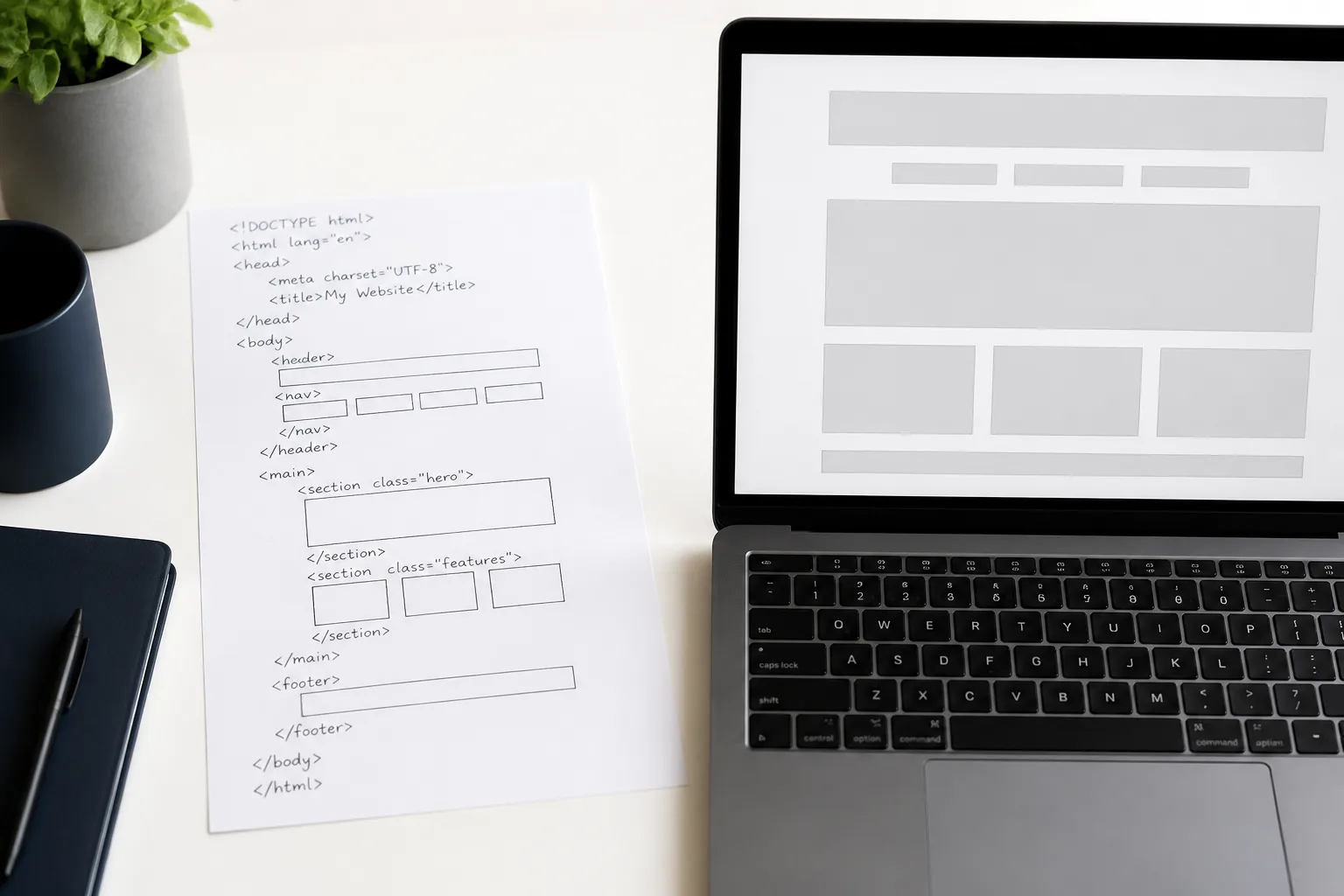
HTML
Small, stable sites that do not need a CMS to stay accurate or fast.

Wix
Speed to launch for a lean team, with the SEO limits named up front instead of discovered later.

Squarespace
Polished templates when design consistency matters more than custom data.

Webflow
Marketing teams that need to ship landing pages without opening a developer ticket.
Markets we write for
We take work nationwide. These city pages exist because search in those metros is specific — sprawl, boroughs, bilingual demand, tourism, tech corridors. Each one links into the five SEO services for that city.
Los Angeles
One name, many cities. Basins and corridors matter more than the metro label.

San Francisco
A dense city beside a spread-out Bay Area. Peninsula and East Bay are separate decisions.
New York
Boroughs and neighborhoods behave like their own markets, on foot and by transit.
Chicago
City neighborhoods and a wide suburban ring that does not search the same way.
Miami
Bilingual demand and trade traffic. Spanish is not an afterthought here.
Nashville
A growing metro where new locations and visitors change what people search for.
Seattle
Water and bridges split the map. Eastside and city are different service areas.
Our Process
Four stages. You see the plan in writing before anyone touches a page.
Discover
How you sell, where you operate, what the current site can support, and which queries already produce (or should produce) leads or revenue.
Strategy
A written plan: page types, location or category architecture, technical priorities, and what we will leave out so pages do not compete.
Build / Optimize
The site work and the on-page, technical, and listing work the plan named — on the platform you chose.
Measure
Reporting tied to the engagement: maps and regional pages, location health, franchise brand vs unit, national rankings, or category revenue.
Work we can show
This is the part of an agency site where you normally get a wall of logos, a screenshot of a line going up and to the right, and a number with no denominator. We are not going to do that. A logo you cannot verify and a chart with the axis cropped off tell you nothing about whether we can fix your search problem.
When a client agrees to be named, the write-up lives on the work page — what the footprint looked like, what we changed, what we deliberately did not change, and how long it took before anything moved. Until a client signs off on that, the honest answer is that we will not invent brands, traffic lifts, or star ratings to fill the space.
That does not leave you with nothing. On a call we will walk your own site: where the location pages compete with each other, which listings disagree with each other, which category pages have no chance of ranking as written, and what order we would fix them in. That conversation is more useful than someone else's case study, because it is about your footprint.
- Named, or not published
- Method over milestones
- Your site, on the call
A case study goes live when the client approves the name and the numbers. No anonymous “national retailer” filler.
The service pages spell out how each engagement actually runs. Read those the way you would read a scope of work.
We come to the first call having already looked. Bring the domain and the location list — see contact.


Do you only work in one city?
No. Engagements run across the United States. We also publish market pages for Los Angeles, San Francisco, New York, Chicago, Miami, Nashville, and Seattle.
Which SEO service should I start with?
Use the comparison on the SEO hub. Regional is a metro. Multi-location is many physical sites. Franchise adds territories and brand vs unit search. National is queries without a city. Ecommerce is catalog architecture and crawl.
Do you work in Spanish?
Yes. The public site, the forms, and the engagement can run in English or Español. Use the language switcher, or go to /es.
Do you rebuild the site, or work on the one we have?
Both happen. Plenty of sites only need structure and on-page work. When the platform or the template is the thing blocking the plan, we say so and scope a rebuild instead of billing you monthly to work around it — see web design.
Who actually does the work?
We do. National Search Authority is hired directly by the company with the search problem, not subcontracted behind another agency. The person who writes your plan is the person on your calls. More on that on the about page.
What do you need from us before the first call?
The domain, a list of locations or territories if you have more than one, and whoever can approve website changes. If you sell online, add the platform and roughly how many products. That is enough to have a real conversation — start at contact.
Start with the form
Share the basics. We continue at [email protected]. Hours are Monday–Friday 9:00 AM–5:00 PM.